Pinwheel UK Alternative: What British Parents Actually Need (2026)

By Pundarik Ranchhod, Kite Inclusive
Published: 20 Mar 2026 · 8 min read
Pinwheel phone is now available in the UK. After years of being a US-only product, British parents can finally order the managed smartphone that promises to give children independence without the risks of TikTok and Instagram.
But availability does not automatically mean it is the right fit for your family. This guide breaks down exactly what Pinwheel offers, what it costs over the long term, and why some parents are choosing a completely different approach that removes the screen from the equation entirely.
What is Pinwheel?
Pinwheel is a managed Android smartphone designed specifically for children. The hardware is a standard Android device, but the operating system is locked down at a deeper level than typical parental controls.
Parents control everything through a web-based Caregiver Portal. You approve each individual app before it appears on your child's device. Social media apps like TikTok, Instagram, and Snapchat are blocked by default and cannot be enabled. The browser has built-in content filtering.
The device also includes GPS location tracking, the ability to view text messages and call logs, and detailed screen time reports. Parents receive notifications when their child arrives at or leaves specific locations like school or home.
“Pinwheel blocks apps at the operating system level, which is materially harder for a child to circumvent than Google Family Link or Apple Screen Time. But the device is still a smartphone with a screen that fits in a pocket.”
UK availability and pricing
Pinwheel launched UK availability in late 2025. The phone works with standard UK SIM cards from any provider. Hardware ships from a European distribution centre with delivery typically taking five to seven business days.
The pricing structure has three distinct components that British parents need to budget for:
- Hardware: £189 one-time purchase for the Pinwheel handset
- Caregiver Portal: £9.99 per month subscription for parental controls and monitoring
- SIM card: £5-15 per month from your chosen UK network provider
The Caregiver Portal subscription is required for the device to function as intended. Without it, you lose access to app approval, content filtering, location tracking, and activity monitoring. The phone still makes calls but loses all the features that differentiate it from a regular Android device.
The real cost over three years
Looking at monthly payments alone obscures the true financial commitment. Here is what each approach actually costs over a typical three-year ownership period:
Cost comparison over three years
| Device | Hardware | Monthly | 3-year total |
|---|---|---|---|
| Pinwheel (managed smartphone) | £189 | £9.99 + SIM (£5-15) | £728-1,088 |
| Kite Phone (VoIP desk phone) | £0 (included) | £14 | £504 |
| Basic Nokia + PAYG SIM | £25 | ~£5 | ~£205 |
- Pinwheel (managed smartphone): Requires SIM contract. Portal subscription mandatory.
- Kite Phone (VoIP desk phone): No SIM required. Hardware included in subscription.
- Basic Nokia + PAYG SIM: No parental controls. No GPS tracking. No app management.
Pricing reflects UK market rates as of March 2026. Verify current costs directly with providers before committing.
The monitoring question
Pinwheel's Caregiver Portal gives parents visibility into essentially everything their child does on the device. You can read their text messages, see who they called and for how long, view their location history, and track their screen time minute by minute.
The question is whether this level of surveillance is what you actually want.
Jonathan Haidt's research, documented extensively in The Anxious Generation, shows that constant monitoring creates its own psychological burden. Children who know every text message is being read develop anxiety around digital communication. Parents who have access to every location ping find themselves checking compulsively. The surveillance dynamic can damage the trust relationship that healthy development requires.
“The ability to read every message does not automatically mean you should. Some families thrive with full transparency. Others find it creates more anxiety than it resolves.”
This is not an argument against Pinwheel specifically. It is a consideration that applies to any device with comprehensive monitoring capabilities. The technology exists. Whether to use it is a family decision that depends on your child's temperament, your own anxiety levels, and your philosophy about privacy and independence.
What if the phone stayed home?
Kite Phone lets children call friends and family from a desk phone with zero screen time. No texts to monitor. No location to track. No apps to manage.
Get Your Kite PhoneA different approach: no screen at all
Kite Phone approaches the problem from the opposite direction. Instead of handing children a managed version of the same device adults struggle to put down, it removes the portable screen entirely.
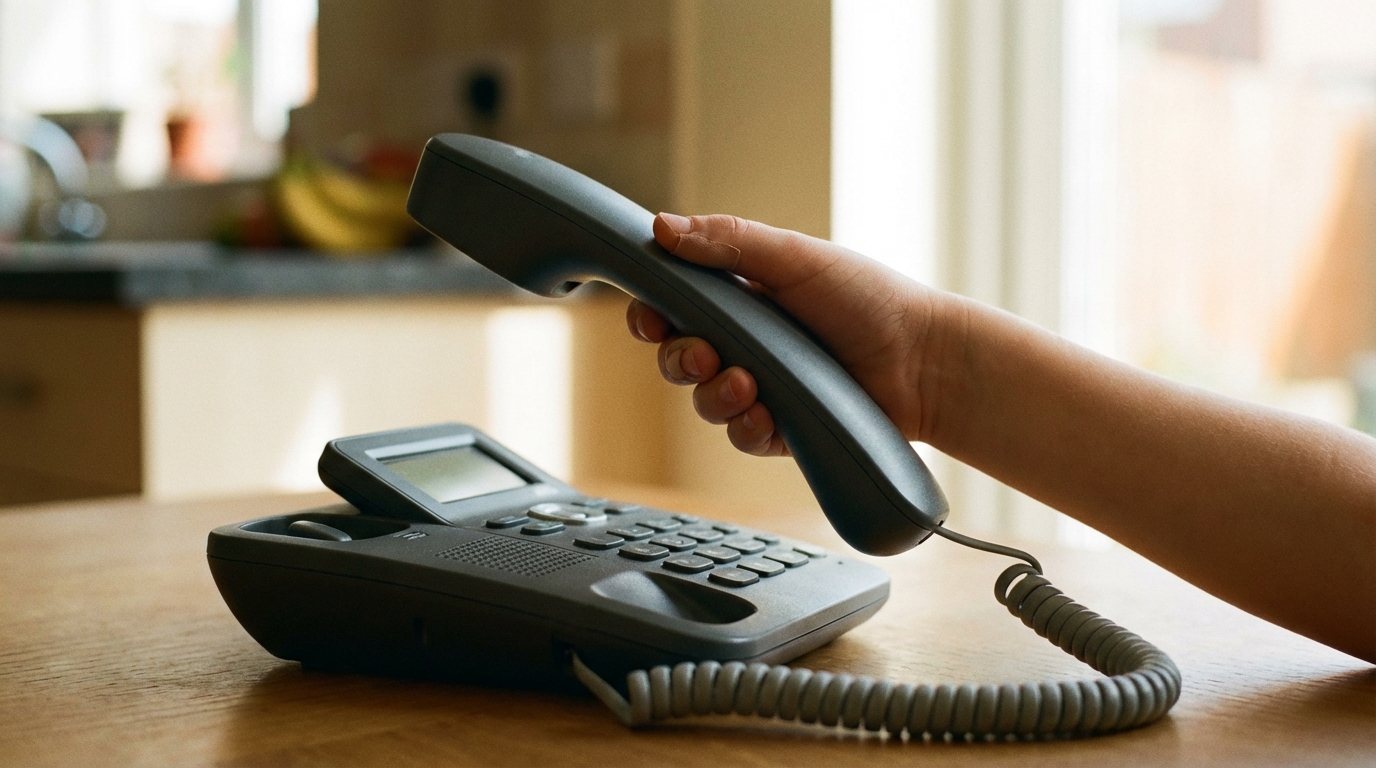
The device is a professional VoIP desk phone that connects to your home WiFi network. It sits on a desk or kitchen counter and stays there. Your child picks up the physical receiver, dials a four-digit code, and connects to approved contacts including UK mobiles, landlines, or 999 emergency services.
There are no text messages because there is no screen. There is no location tracking because the phone does not leave the house. There are no apps because it is a telephone, not a computer.
The parent portal exists but it is minimal by design. You manage which numbers your child can dial using simple four-digit speed codes. You can set up group calling so your child can have conference calls with friends after school. The call logs exist but the device does not generate the kind of data that demands constant parental review.
The trade-off is obvious and intentional. When your child walks out the front door, they carry no device at all. For families who want communication inside the home but are not ready for a portable phone of any kind, this is a feature rather than a limitation.
Side-by-side comparison
The table below strips away the marketing and shows the raw mechanics of each approach:
| Feature | Pinwheel | Kite Phone |
|---|---|---|
| Device type | Managed Android smartphone | VoIP desk phone |
| Portable | Yes | No |
| Screen | Yes (touchscreen) | No |
| Calls to any UK number | Yes | Yes |
| 999 emergency access | Yes | Yes |
| Text messaging | Yes (monitored) | No |
| GPS location tracking | Yes | No (stationary device) |
| App installation | Parent-approved only | Not applicable |
| Social media access | Blocked by default | Not possible |
| Group calling | Via apps | Built-in (up to 5 people) |
| Monthly cost | £15-25 (portal + SIM) | £14 (all-inclusive) |
| Upfront cost | £189 | £0 (hardware included) |
| Contract length | Monthly (cancel anytime) | 36 months |
Which approach fits which family
Pinwheel makes sense if:
- Your child needs portable communication (walking to school, activities, time with other parent)
- You want GPS location tracking when they are out of the house
- You are comfortable with the monitoring dynamic and will use it constructively
- Your child is mature enough for a smartphone but you want guardrails
- You see this as training wheels before they graduate to a regular phone
Kite Phone makes sense if:
- You want to delay portable devices entirely
- Your child primarily needs to contact friends and family from home
- You prefer zero screen time from their phone device
- The smartphone itself is the problem you are trying to avoid
- Your family is part of or aligned with the Smartphone Free Childhood movement
Many families use both: A Kite Phone at home for social calling, paired with a GPS watch like Xplora for location tracking when the child is out. This combination provides the functionality of both approaches without introducing a smartphone at all.
“The question is not which device has better parental controls. The question is whether you want to manage a smartphone or remove it from the equation entirely.”
A broader comparison of all UK phone alternatives for children, including GPS watches, basic phones, and audio devices, is available in the comprehensive comparison guide.
Frequently Asked Questions
Related Guides
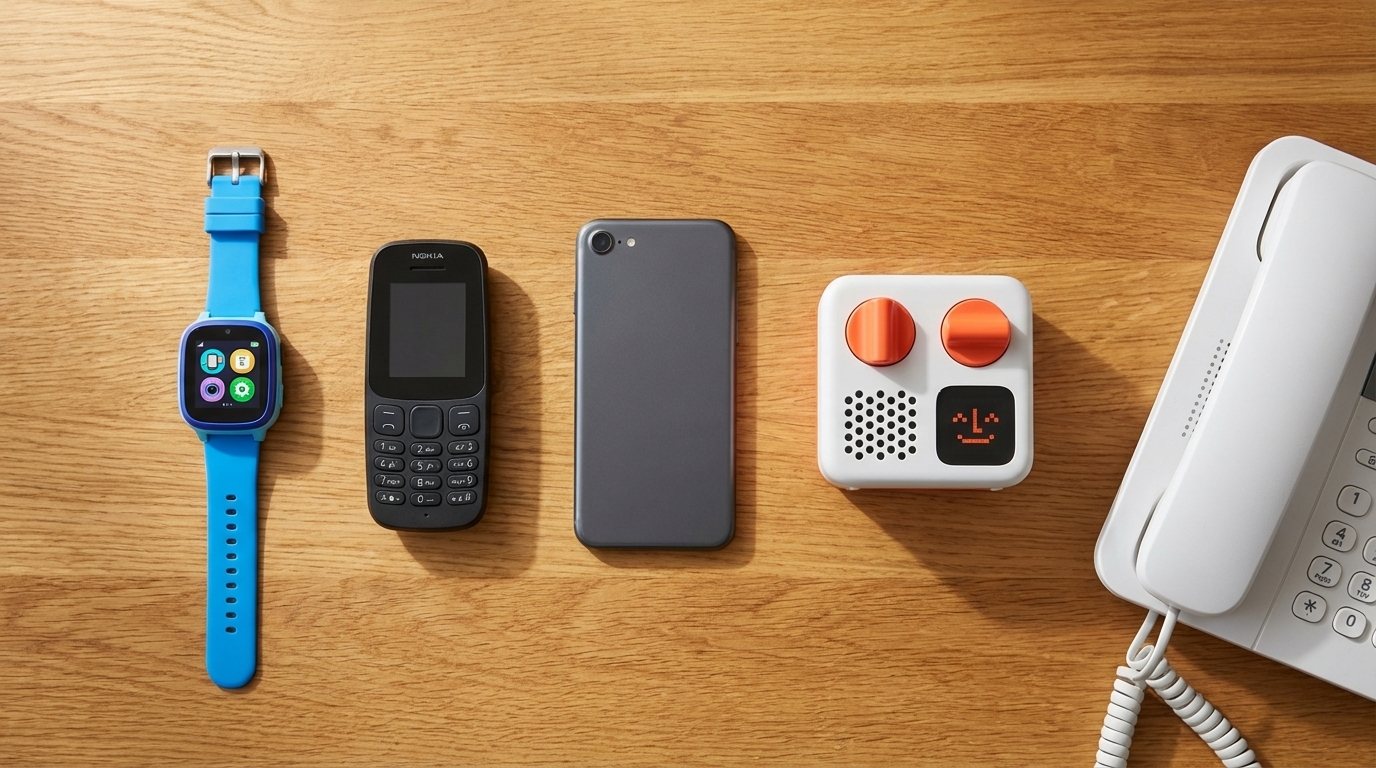
Best First Phone for Kids UK 2026: GPS Watches vs Dumb Phones vs WiFi Landlines Compared
19 Mar 2026 · 12 min read