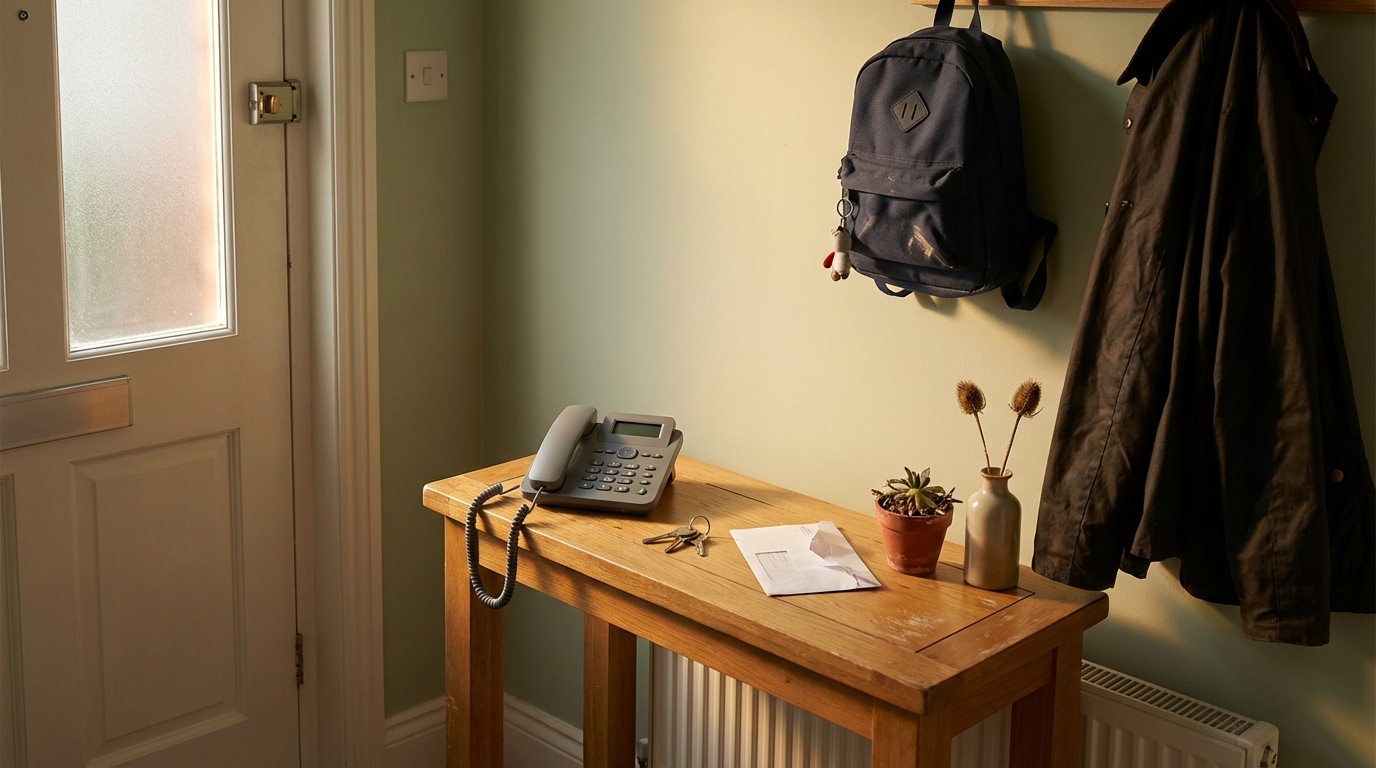
Best First Phone for Kids UK 2026: GPS Watches vs Dumb Phones vs WiFi Landlines Compared

By Pundarik Ranchhod, Kite Inclusive
Published: 19 Mar 2026 | Updated: 28 Apr 2026 · 12 min read
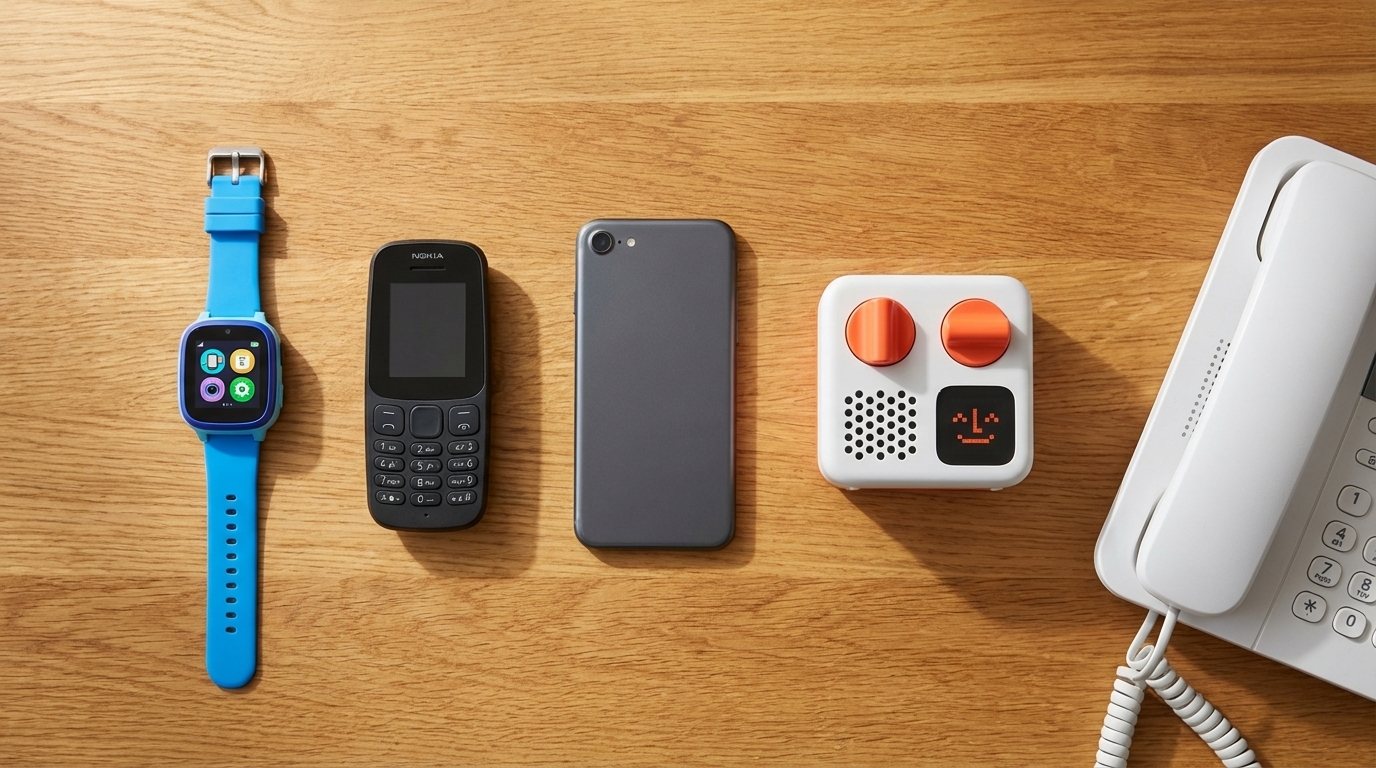
What is the best first phone for a child in the UK? If you are looking for phones for kids with no internet, the answer depends less on which brand than on how much connectivity to allow, how early, and in what physical form.
The actual decision sitting heavy on the kitchen table is not about picking a brand from a lineup, but rather how much connectivity to allow, how early to introduce it, and in what exact physical form it should arrive. Many UK parents are now actively searching for smartphone free childhood alternatives that keep their children connected without the risks.
The British market does not offer a straight path from a plastic toy to a glass slab. It splinters into five separate categories of devices that perform fundamentally different jobs: dumb phones for kids, GPS phone watches, managed smartphones, screen-free audio devices, and WiFi landline phones.
The five categories explained
A GPS watch gives you a live location and limited calling with no screen, trading a child's freedom to wander for immediate geographical peace of mind.
A basic phone handles calls and texts with zero internet, demanding the child carry it while trading playground prestige for indestructible utility.
A managed smartphone hands them the whole glass device but layers it with parental controls and monitoring software. Giving real digital independence but with the risk of them bypassing the controls.
A screen-free audio device plays curated content and closed-loop messaging without dialing an external number, replacing screen-based entertainment with safe audio.
A stationary VoIP home phone dials any mobile or landline from the kitchen counter, ensuring there is no glowing rectangle waiting for them outside the house.
“The first two choices delay the smartphone. The third manages it. The fourth replaces entertainment. The fifth replaces personal connectivity entirely. These are different problems with different solutions.”
1. GPS Watches & Phone Watches for Kids
Parents often ask: can my child call 999 from a GPS watch? The short answer is no. Devices like the Xplora or Spacetalk do not dial emergency services directly; their SOS buttons are hardwired to ring a parent or guardian instead.
They do the job well for younger children, giving you a live GPS dot on your phone, a basic camera on some models, and a tightly controlled communication loop. The child can only call or text the handful of numbers you specifically approve.
Because it physically attaches to an arm, it is incredibly hard to leave behind on a muddy football pitch. This geographic certainty comes with a recurring bill, usually requiring a standard SIM plan between £5 and £10 a month. You also must accept that a glowing piece of plastic on a wrist can easily become a massive distraction during the school day.
These watches buy a few years of geographical certainty before most children outgrow the form factor and ask for a real handset.
2. "Dumb Phones" & Basic Feature Phones
Many UK parents are searching for a true dumb phone for kids—something that makes calls but has zero internet, zero apps, and zero touchscreen. The default British option hangs in a blister pack in aisle four of Tesco.
A Nokia 105 or a 2660 Flip costs twenty or thirty quid and requires nothing more than a Pay-As-You-Go SIM card.
There are no contracts and no monthly direct debits. It is just a hard plastic brick that makes calls, sends text messages, and survives being dropped onto wet concrete.
It solves the immediate panic of how a child reaches you if their bus is late. Although this is a hard, blind trade. There is zero geographical comfort because there is no glowing dot on a map proving they walked through the school gates. You are also handing over a direct line to the outside world.
While some models offer basic number screening, there is no software dashboard to lock down their contact list, leaving them vulnerable to wrong numbers and spam.
Then there is the physical friction. Forcing a child raised on smooth glass to press the number seven four times just to type the letter 's' is an alien, frustrating chore. They hate the T9 keypad. They will usually give up and call you instead.
3. Managed Smartphones & Parental Control Phones
Does Bark phone work in the UK? The short answer is no. American parenting blogs are filled with slick videos for heavily marketed products like Bark, Gabb Wireless, and Troomi, promising a risk-free digital childhood.
Those devices are not available here. They are locked to foreign cellular networks and turn into useless plastic bricks the second they cross the Atlantic. Parents waste days chasing options that do not exist in the UK.
If you want a managed smartphone in the UK, the local approach means buying a standard Android or iOS device and building the walls yourself. You bolt Google Family Link onto an Android, wrestle with Apple Screen Time, or pay a monthly subscription for a third-party watchdog like Qustodio.
The Pinwheel phone is now available in the UK but the high level of monitoring e.g. viewing all activity via the portal, creates anxiety for parents and children. The research by Jonathan Haidt, in his book, The Anxious Generation, shows that trust is damaged and prevents children from developing healthy digital habits.
“A managed smartphone is still a smartphone. You are handing over the exact physical object that the cultural movement is fighting to delay.”
Look at this choice with cold honesty. Add tracking software and app limits over the operating system, but some parental control systems are harder to circumvent than others. A highly motivated thirteen-year-old will often find the factory reset option, create a secondary Google account or bypass controls using a VPN app.
The device still slips into their pocket, goes to the park, and demands their physical attention. Some families actively want this path to train a child on real hardware before releasing them into the digital wild at sixteen. That is a totally valid calculation. Just do not trick yourself into believing a restricted smartphone is a different species of device.
4. Screen-Free Audio (Yoto, Tonies & Kids Bluetooth Headphones)
Walk into a primary schooler's bedroom and you will likely find a Toniebox or a Yoto Player.
These heavy plastic cubes are brilliant at exactly one job: playing audiobooks and music without dragging your kid into the algorithmic swamp of YouTube.
They are not phones.
A child sitting on the rug with a Yoto cannot ring your mobile to say they feel sick.
The new wave pushes this concept slightly further. The NODI Flip, dropping into the UK market sometime this year for around £119 to £179, gives a child Spotify access and the ability to send voice notes. But look closely at the mechanism.
Those asynchronous voice messages only travel to other kids with a NODI Flip or to adults using the specific NODI parent app. It is a locked, private club. They cannot dial a real landline, call their uncle's mobile, or ring 999.
Do not confuse your problems. If you want to replace an iPad with safe, curated noise, buy an audio device. It cures the entertainment headache. If you need your child to speak to the outside world, you are shopping in the wrong category.
Give your child a phone without the screen
Kite Phone lets children call friends and family from home with zero screen time. Try it free for 30 days.
Get Your Kite Phone5. WiFi Landline Phones for Kids (VoIP)
If you are looking for phones for kids with no internet, the VoIP landline is the most secure option. A WiFi landline phone sits on a desk and stays there. Kite Phone is a Voice over Internet Protocol handset that connects directly to a home WiFi network. Unlike US imports or a basic Tin Can phone alternative, Kite Phone works instantly in the UK on your home WiFi.
The child picks up the receiver and dials approved UK mobile numbers, landlines, or 999. There is no portable screen. When the child walks out the front door, the hardware remains inside the house.
The service operates on a monthly subscription tied to a thirty-six-month contract. The system includes a conference calling function, allowing multiple users to speak on the same line simultaneously. A community interest company runs the network, directing the revenue toward local arts education.
The trade-off is strictly geographic. The device allows voice contact with anyone and completely removes the portable screen from the equation.
Children use the conference feature to talk in groups after school. But the hardware is bolted to the router. It requires an active internet connection to function at all. If the child walks to the park or takes the bus, they carry zero connectivity.
It solves the problem of home communication, but it leaves the child entirely unreachable the second they step onto the pavement.
Combination strategies
The reality of raising a child right now means cobbling together a hybrid system. The most common setup for an eight-year-old pairs a GPS watch with a VoIP home phone.
You strap the tracker to their wrist to watch a blue dot move toward the local park. When they walk back through the front door, they drop their muddy coat and pick up a physical receiver to gossip with friends on a conference call. You get geographic peace of mind outside and social connection inside, with no glass slab anywhere in the equation.
Older kids require a different bargain. Once they hit ten or eleven, you might hand them a battered Nokia brick to carry on the bus for raw independence, while letting them use a monitored screen in the living room. It covers the basic communication out in the wild and the supervised entertainment on the sofa.
“Your specific combination depends entirely on the child's age, whether you prioritise tracking or calling, and the temperature at the school gates. This is where the Smartphone Free Childhood pacts make a big difference.”
If six other families agree to the exact same combination, the social isolation completely evaporates.
The decision in one table
Staring at ten different browser tabs will give you a headache.
The table below strips away the advertising and leaves only the raw mechanics of each category, showing exactly what you are trading.
It shows whether the plastic dials 999, whether it tracks a physical body across a map, and what it costs to keep the connection alive every month. Tech startups vanish and cellular providers hike their tariffs, so verify the final monthly drain on your bank account directly with the provider before you commit.
Pricing and availability reflect the state of the UK market as of Tuesday, 28 April 2026.
| Category | Examples | UK available | Calls to any number | 999 access | GPS tracking | Monthly cost | Portable |
|---|---|---|---|---|---|---|---|
| GPS watches | Xplora, Spacetalk | Yes | No | No | Yes | £5–£10 | Yes |
| Dumb phones | Nokia 105, 2660 | Yes | Yes | Yes | No | £5–£10 | Yes |
| Managed smartphones | Pinwheel | Yes | Yes | Yes | Yes | £20–£35 | Yes |
| Screen-free audio | Yoto, NODI Flip | Yes | No | No | No | £4–£15* | No† |
| WiFi landlines | Kite Phone | Yes | Yes | Yes | No | £14 | No |
*Yoto cards: £10–£25 each (or Yoto Club subscription from £3.99/month for digital content + discounts)
*Toniebox figurines: £14.99 each typically
*NODI Flip with eSIM: £5–£10/month for minimal data plans (1–5GB)
†Yoto and Toniebox are home devices; NODI Flip portable but limited connectivity
The social pressure driving these hardware choices is mapped out in The UK Parents' Movement to Delay Smartphones.
If you decide to anchor their connection to a desk, what these phones are and how they work is explained in our landline phone for kids UK guide.
Still overwhelmed by the options?
Take our 30-second quiz to get a personalised recommendation based on your child's age, your home WiFi setup, and what matters most to your family.
Find the right phone for your childFrequently Asked Questions
Related Guides

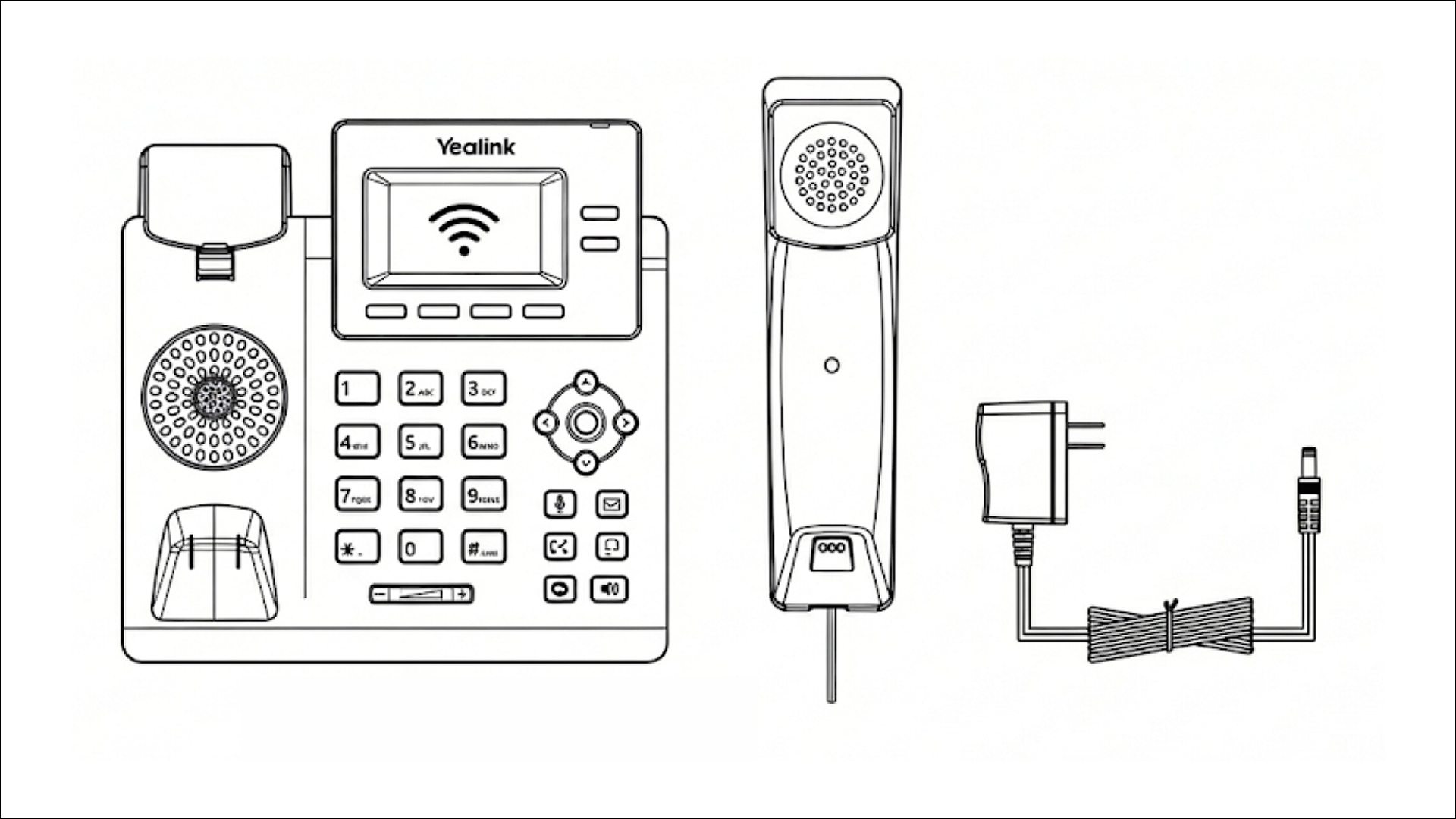
How to Set Up a Kids VoIP Landline Phone at Home | UK Parent Guide 2026
25 Jan 2026 · 8 min read