Best Dumb Phone for Kids with GPS Tracking | UK Guide 2026

By Pundarik Ranchhod, Kite Inclusive
Published: 25 May 2026 | Updated: 31 May 2026 · 8 min read
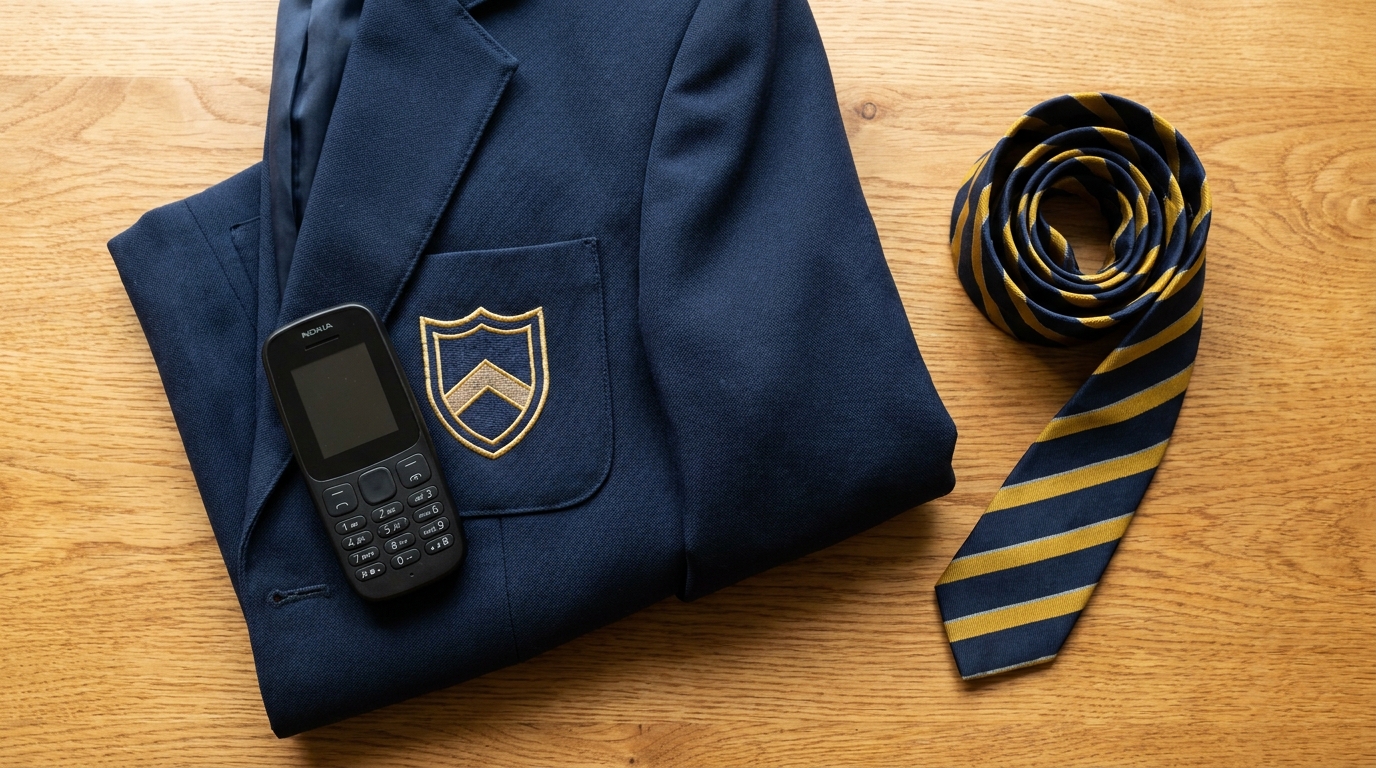
No UK-available dumb phone for children includes GPS tracking. Parents searching for one will not find it in June 2026, and the absence is structural rather than accidental. A Nokia 105, a Nokia 2660 Flip, a Nokia 3210 4G, none of them carries a GPS receiver. The SIM cards that pair with these phones do not provide network-side location reporting on standard consumer plans.
The question parents are asking is rarely about the device. It is about reaching a child and knowing where the child is, without putting a smartphone in their hand. Three approaches deliver that combination. This guide sets them out, with verified UK pricing as of June 2026.
Why the device parents want does not exist
Three reasons explain the absence.
First, hardware cost. A GPS receiver adds roughly £8–£15 to the bill of materials for a feature phone. It also draws enough power to compromise the multi-week standby that justifies buying one. With a Nokia 105 retailing at £25, there is no margin to absorb the extra component cost. The buyer wants the device precisely because it does not need charging every night.
Second, category split. In the UK, children's GPS devices are sold as watches or trackers, not as phones. Combining the two crosses into the kids' smartphone category — the category dumb phones exist to avoid.
Third, market evidence. The June 2026 UK roundup of dumb phones for children lists the Nokia 2660 Flip, Nokia 110 4G, Alcatel 3080 4G, Alcatel 1066G, and Doro 1380. None includes GPS. Our current guide to UK smartphone alternatives treats GPS as either a smartwatch feature or a network-tracking add-on. Niche imports may exist outside mainstream retail. There is no widely available UK device that combines a dumb phone's restrictions with a child tracking location feed.
“There is no widely available UK device that combines a dumb phone's restrictions with a child tracking location feed.”
Combination A: Basic phone plus GPS watch
Most UK families solving this problem use two devices. The child carries a dumb phone for calling and wears a GPS watch for location and SOS.
The phone. Typical UK street prices as of June 2026 are Nokia 105 (2023) at £13–£25, Nokia 2660 Flip at £40–£65, and Nokia 3210 4G at £50–£70. Amazon UK pricing is seller-dependent and changes weekly. Verify current pricing with retailers.
A PAYG SIM from Asda Mobile, GiffGaff, or Lebara at £5–£10 per month gives unlimited UK calls including 999. No GPS receiver. No internet browsing on the 2G models; basic browsing only on some 4G models, which parents should disable at the network level where possible.
The watch. Xplora XGO3 at £139.99 or Xplora X6Play at £179.99, each bundled with the Connect 12 Basic SIM plan at £7.99 per month. The plan has a 12-month minimum term, after which it continues on a rolling basis and can be changed or cancelled at any time.
The watch provides real-time location, geofencing alerts, and IP68 water resistance. GPS accuracy in urban UK areas is typically 5-15 metres. The SOS button calls a chain of parent-defined contacts after a long press. It does not dial 999. Battery lasts 1-3 days depending on usage.
Combined upfront £150–£250. Monthly £13–£18. Three-year total £620–£900.
Two devices to charge, two devices to lose. The watch lasts one to three days between charges; the phone lasts a fortnight or more. This is the combination to choose if your child walks to school independently and has unsupervised time outside the home. Ages 7–11 covers most cases. The dumb phone guide covers the phone side of the pairing in detail.
Combination B: GPS watch only
For children aged 5–8, a GPS watch on its own often covers what the parent actually needs.
The child cannot dial arbitrary numbers, but at this age that is rarely what parents need most. The watch reaches pre-set parent and grandparent contacts. Location updates every few minutes via the parent's app. The SOS chain rings family members in sequence after a long press.
What this approach gives up: direct 999 access (the SOS triggers parent contacts, not emergency services), calls to friends from any number outside the approved whitelist, and independent reading-age texting. Xplora supports voice notes; written text relies on the parent app on both ends.
Costs: £139.99 upfront for the XGO3 or £179.99 for the X6Play, plus £7.99 per month for the Connect 12 Basic SIM plan with a 12-month minimum term and rolling continuation thereafter. Three-year total £427–£467.
Suits children rarely beyond adult supervision: school runs, after-school clubs, walking with friends. Calls to non-family numbers are not yet in scope at this age for most families.
Give your child a phone without the screen
Kite Phone lets children call friends and family from home with zero screen time. A perfect complement to a GPS watch for out-of-home tracking.
Get Your Kite PhoneCombination C: Home phone plus GPS watch
The third combination addresses a different shape of problem. Most children aged 5–10 do their social calling from home. Memorising a friend's eleven-digit mobile number is a barrier at age seven. Dialling a four-digit extension on a kitchen handset is not.
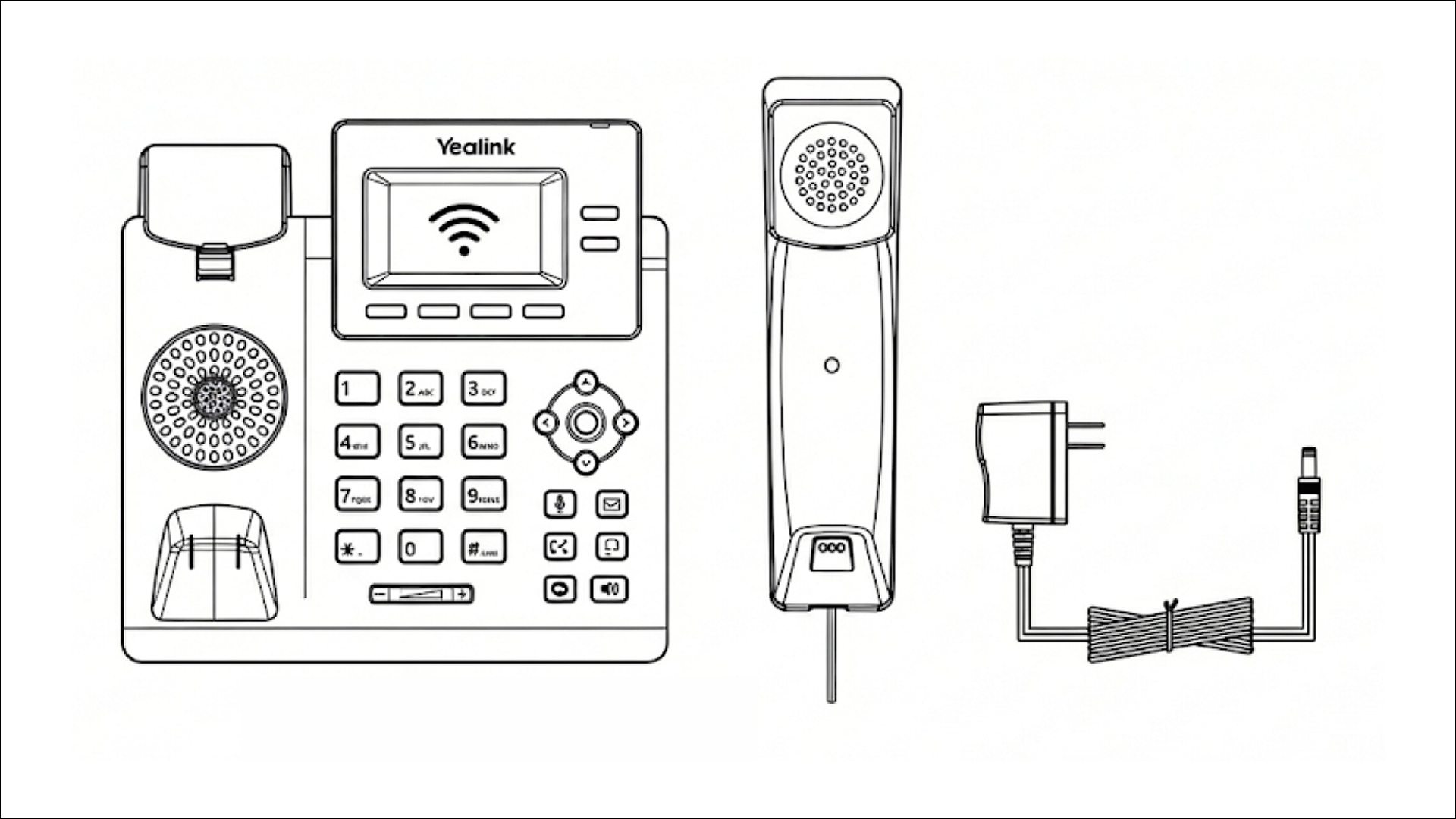
This approach uses a VoIP home phone for at-home calling and a GPS watch for outside the home. The phone stays on the kitchen counter. The watch goes wherever the child does.
Kite Phone is a VoIP service running over the home WiFi connection, with hardware included. The monthly cost is £14 on a contract. It connects to any UK number including 999 and supports conference calls with up to five participants. It does not leave the house.
The watch component matches Combination A: Xplora XGO3 at £139.99 or X6Play at £179.99, plus £7.99 per month on the Connect 12 Basic plan with a 12-month minimum and rolling continuation.
Combined three-year cost: approximately £930–£970. Higher than Combination A on paper. Lower than Combination A once portable-device breakage and replacement are accounted for. A phone that lives on a counter does not get dropped on the school run.
Works for families with reliable home broadband and children who want regular calls with friends. The landline setup guide covers the wider category.
Three combinations side by side
| Combination | Upfront | Monthly | 3-year total | Calls to any UK number | 999 from device | Location |
|---|---|---|---|---|---|---|
| A: Nokia + Xplora | £150–£250 | £13–£18 | £620–£900 | Yes (Nokia) | Yes (Nokia) | Yes (watch) |
| B: Xplora alone | £140–£180 | £7.99 | £430–£470 | No (whitelist only) | No | Yes |
| C: Kite Phone + Xplora | £140–£180 | £21.99 | £930–£970 | Yes (Kite Phone) | Yes (Kite Phone) | Yes (watch) |
Pricing reflects UK street prices and operator tariffs as of June 2026. Amazon UK and third-party retailer pricing varies by seller. Verify all figures with the manufacturer or retailer before purchase. The full comparison article sets these three combinations against managed smartphones and screen-free audio devices.
The single-device shortcuts that get raised on forums
Two approaches come up on parenting forums and partly answer the question without delivering full GPS tracking.
ParentShield. ParentShield offers cell-tower-based location as a parent-dashboard feature on 4G dumb phones, alongside call and SMS recording. The location is described as a confidence circle around the serving cell tower, not the phone itself. Accuracy varies with network conditions, environment, and data usage. Updates may be delayed by up to an hour.
Useful as a rough whereabouts indicator when GPS is unavailable; not a substitute for the second-by-second positioning a GPS watch provides. Plans start at £5.99 per month (Safe Stage 1); higher tiers including Roam Stage 1 cost £9.99 per month.
Bluetooth trackers. An Apple AirTag (around £29–£35) or Tile (£20–£35) attached to a Nokia handset locates the device when it passes within Bluetooth range of another iPhone or Tile-network device. Useful for finding a misplaced phone. Not a real-time location feed for a child.
“Cell-tower location is useful as a rough whereabouts indicator when GPS is unavailable; not a substitute for the second-by-second positioning a GPS watch provides.”
Buying guide: Which combination is right for your child?
Ages 5–8: GPS watch only (Combination B)
Your child's main need is being reachable by family and being tracked by you. A Xplora XGO3 (£139.99 + £7.99/month) covers this without extra complexity. Save cost and simplify by skipping the dumb phone for now.
Ages 7–11: Phone + GPS watch (Combination A)
Your child walks to school, has unsupervised time outside the home, and wants to call you or trusted adults independently. Pair a Nokia 105 or 2660 Flip (£25–£65) with an Xplora watch (£139.99 + £7.99/month). This gives you GPS tracking plus independent calling capability.
Ages 5–10, frequent home-based calling: Home phone + GPS watch (Combination C)
Your child regularly calls friends from home and needs GPS when out. A Kite Phone (£14/month) on your kitchen counter lets them make calls without memorising 11-digit numbers. The Xplora watch handles outdoor tracking. Higher cost but lower breakage risk.
UK networks and coverage for dumb phones and GPS watches
Dumb phone networks. PAYG SIMs work on the main UK networks: EE, Vodafone, O2, and Three. Coverage maps vary slightly. Download each network's coverage map for your postcode to confirm signal strength at school and home. Rural areas may favour EE or Vodafone for better geographic reach.
Popular PAYG providers include Asda Mobile (Vodafone network), GiffGaff (O2 network), and Lebara (Vodafone network). Pricing is similar across all. Check which network works best in your area first.
GPS watch networks. Xplora uses Vodafone infrastructure in the UK. Spacetalk uses Three. If you have weak coverage on Vodafone in your area, Spacetalk may be a better choice, though Spacetalk offers fewer features and UK pricing varies. Verify network coverage in your region before purchasing any device.
GPS accuracy. Urban UK areas: 5–15 metres typical accuracy. Suburban areas: 10–30 metres. Rural areas: 30–100+ metres depending on tree coverage and building density. Dense forests, tunnels, and indoors degrade GPS significantly. Check your provider's specification for worst-case accuracy in woodland areas if your child spends time there.
GPS safety tips for parents
Explain the SOS button limitation. GPS watches don't dial 999. Teach your child to press SOS only when they need you, not in a genuine emergency where they must dial 999 from a real phone. Role-play scenarios so they understand the difference.
Charge the watch daily. A 1–3 day battery means you need to charge it every evening. Build this into your routine (like brushing teeth) so the watch is always ready. A dead watch provides no tracking or emergency contact capability.
Secure the parent app. Use a strong password and two-factor authentication on your parent app account. If someone gains access, they see your child's live location. Treat it like you would a home security password.
Do not track constantly. Resist checking your child's location every five minutes. Constant surveillance harms trust and independence. Set limits on checking (e.g., twice daily during school, once during school time). Let your child grow into independence gradually.
Test accuracy in your area. Before relying on GPS tracking, test the watch in your local area. Walk a known route and check the map accuracy. You need to know how reliable it is in dense buildings, parks, and your neighbourhood before you trust it.
Common questions
See the FAQ section below for detailed answers to the most common questions about dumb phones with GPS tracking.
Last verified: June 2026. UK retail pricing changes frequently. Verify all figures with the manufacturer or retailer before purchase. GPS accuracy depends on local conditions. Test in your area before relying on tracking for safety.
Frequently Asked Questions
Related Guides
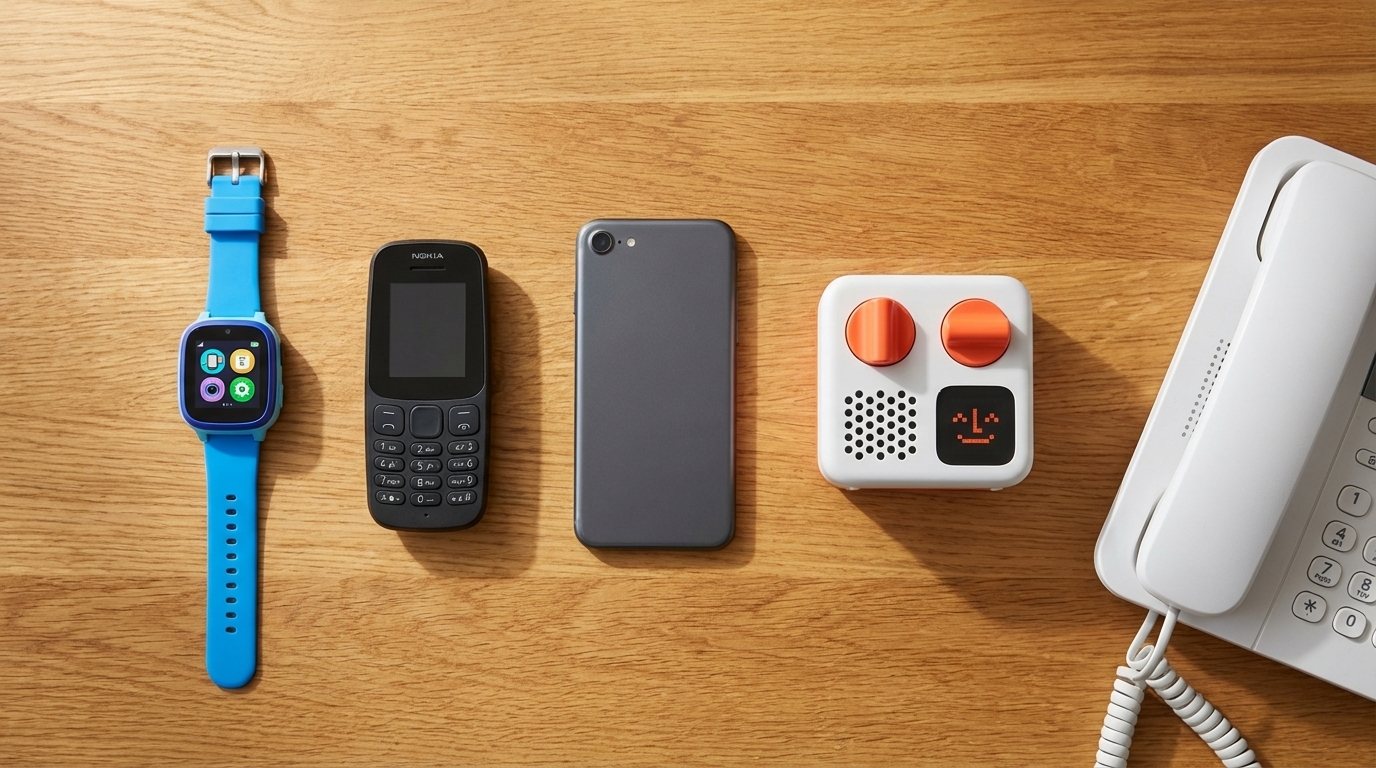
Best First Phone for Kids UK 2026: GPS Watches vs Dumb Phones vs WiFi Landlines Compared
19 Mar 2026 · 12 min read