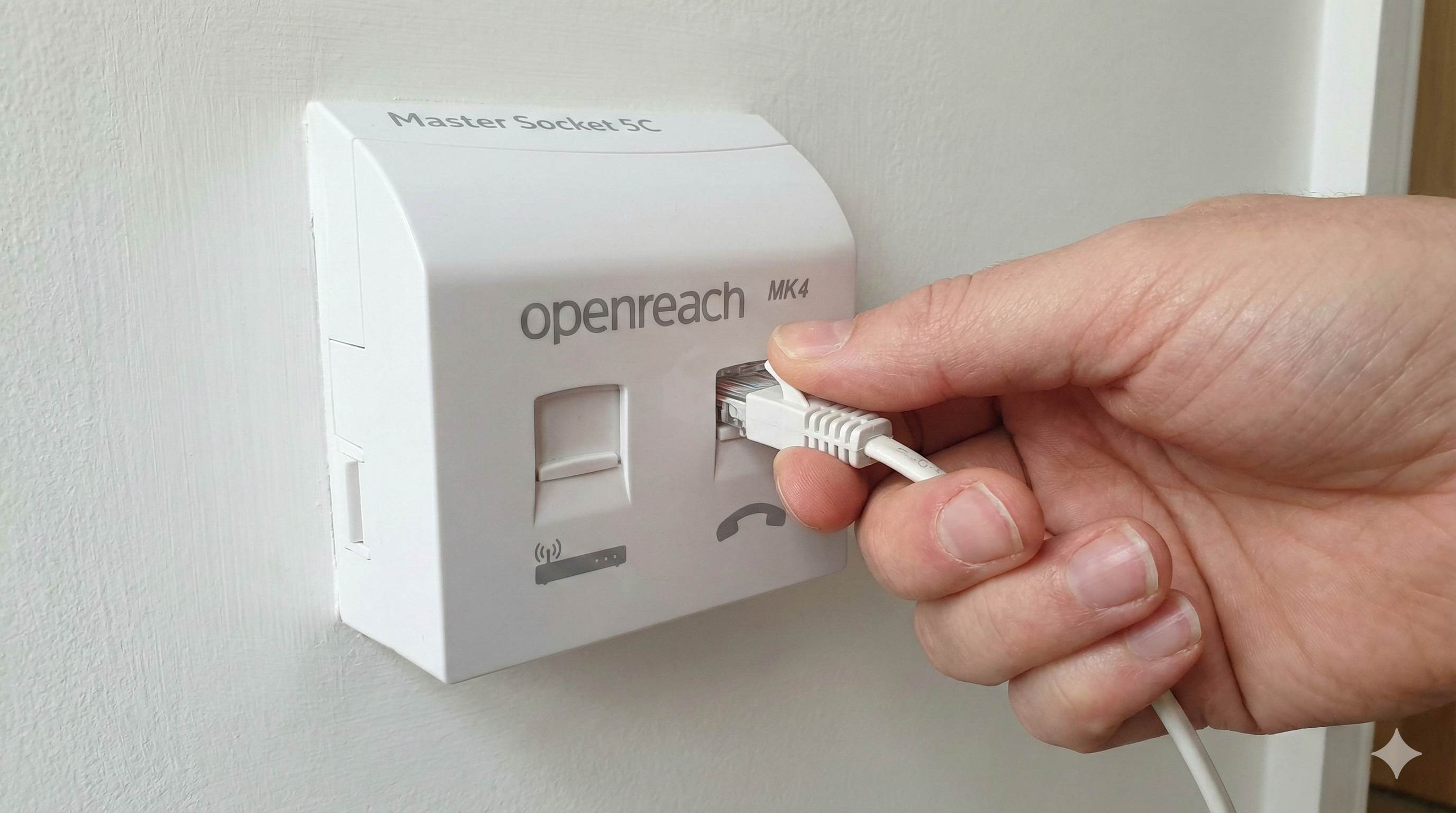
Landline Phone for Kids UK: The WiFi VoIP Home Phone, Explained

By Pundarik Ranchhod, Kite Inclusive
Published: 12 May 2026 | Updated: 20 May 2026 · 10 min read
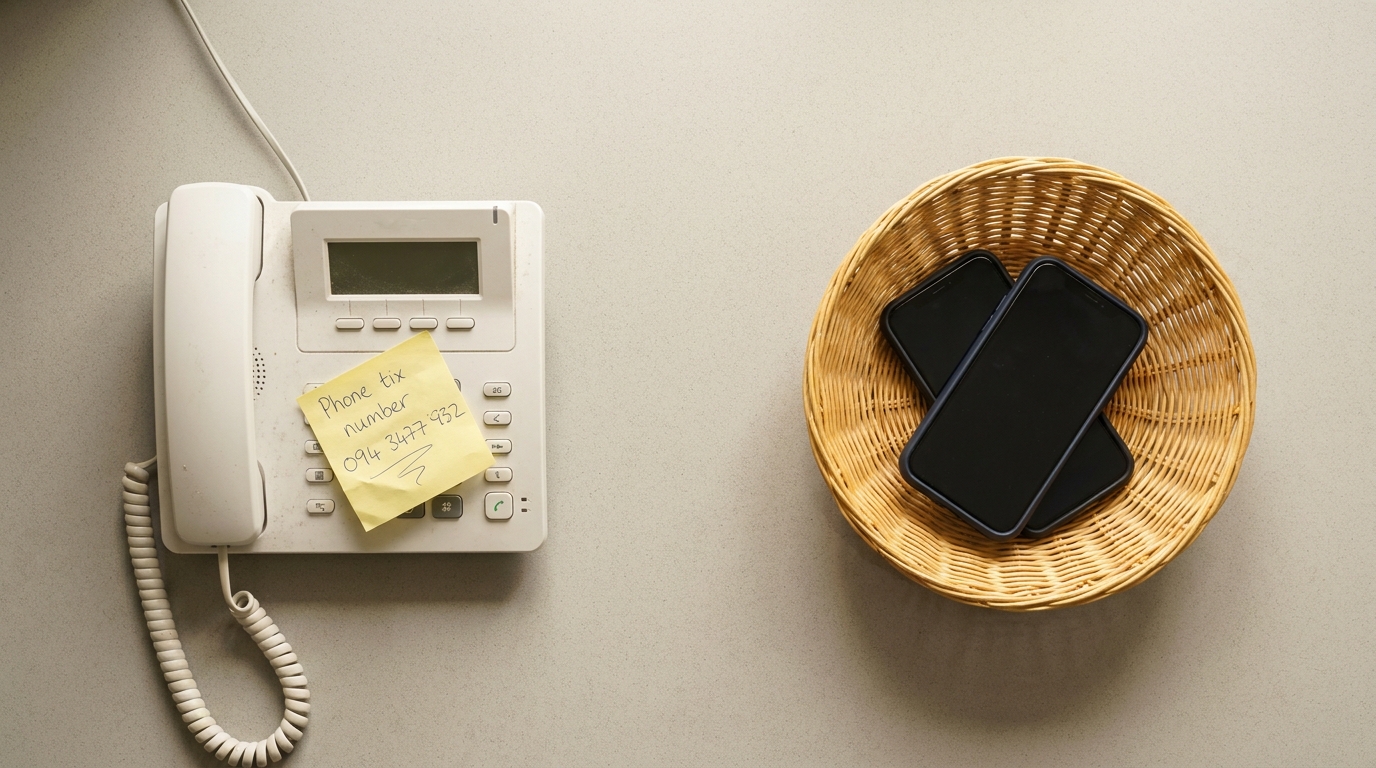
A landline phone for kids, also called a WiFi landline or a VoIP phone, is a home telephone that works over your broadband instead of a traditional copper line. Unlike a smartphone, it has no apps, no browser, and no portable screen. The child picks up a handset, dials a number, and speaks, exactly like the landline phone that used to hang on the kitchen wall, except it routes calls through your broadband connection rather than a copper wire.
What a landline phone for kids is
VoIP stands for Voice over Internet Protocol. The phone converts voice into data packets and sends them over your home internet, connecting through broadband rather than the traditional BT copper network, which is being switched off by January 2027.
The phone sits on a table, plugs into a power socket, joins the home WiFi network, and works like the landline phone for kids that UK parents remember from their own childhoods. It calls any UK number: mobiles, landlines, 999. Conference calling connects multiple participants on a single line. When the child hangs up, the phone becomes inert. There is nothing to check, scroll, or tap. No notifications arrive. No algorithms compete for attention.
Cost ranges from £8 to £14 per month depending on the provider, plus hardware. Managed services include the handset. Self-provisioned setups run £50–£100 for the hardware with a separate VoIP subscription.
What children aged 5–12 actually need from a phone
The communication needs of a five-year-old and a twelve-year-old share almost nothing in common except this: both are better served by a device in a shared space than by a screen in a pocket.
At five, six, and seven, a child's phone use is relational. They call grandparents. An aunt. A cousin who lives three hours away. The need is to maintain bonds with people who don't live in the house, and it barely requires technology at all. A shared phone in the kitchen handles it entirely. The child learns to dial a number, to say hello properly, to listen, to say goodbye without hanging up mid-sentence. These are foundational communication skills that a touchscreen shortcut cannot replicate.
By eight and nine, the phone becomes a coordination tool. The child wants to arrange meeting a friend at the park at three o'clock. They need to confirm a playdate. They call to check a homework answer. Conference calling emerges here as the feature children respond to most. During a November 2025 trial with three families in West London, children memorised four-digit extensions within days and averaged three to four participants per call. There were twenty-minute conversations about weekend plans, homework, and the ordinary texture of daily life. Nobody told them to use the conference feature. They discovered it and made it theirs.
Between ten and twelve, independence increases and the communication need splits. Out-of-home reachability, whether the bus, the walk to school, or the football pitch, all demand a portable device. A VoIP phone cannot follow a child out the front door. But home-based social calling, the after-school catch-up, the group conversation, the long chat with a friend about nothing in particular, is where a desk phone outperforms anything portable. Most families at this age pair a VoIP landline with a dumb phone or GPS watch to cover both halves of the equation.
A VoIP phone does not solve every communication need at every age. It solves the home-based needs across the entire range. For the youngest children, those are the only needs that exist.
Why a shared device changes the household
Children learn communication behaviours by watching adults. In most UK households, every adult carries an individual screen. Calls happen in private. Messages arrive silently. The child's model for how people communicate is a person holding a device they cannot see, engaged in a conversation they cannot hear. The child instantly loses the parent's attention when a mobile call arrives or a notification is looked at.
One father described watching his two-year-old hold a wooden block to his ear in the bath, then tap the back of it as though pressing a touchscreen. The child had never been given a phone. He had learned the behaviour purely from observation.
A VoIP phone in a shared space reverses this. The phone sits on a counter or a hallway table. Calls happen where other people are present. A parent hears the child's side of a conversation, not through monitoring software, but through the natural background awareness that existed in every household with a hallway telephone for the past century.
The child knows the call is audible. They adjust their behaviour accordingly, learning the difference between a private conversation and a shared environment. This is not surveillance. It is the ordinary social learning that a generation raised on individual screens has lost access to.
When a household designates a shared phone as the default communication device, it creates a boundary around personal screens without imposing rules on children alone. Some families place mobile phones in a basket by the front door during the evening and use the landline for all calls. The norm applies to adults and children equally. The child doesn't experience the restriction as something done to them; they see it as how the household works.
This is not about removing technology from a home. It is about choosing which communication model the household operates on: individual screens behind closed doors, or a shared device in a common room.
What children learn from a home phone
Every skill listed here is a specific, observable behaviour, not an abstraction.
Answering a ringing phone without knowing who is calling. The child picks up, greets the caller, identifies themselves, and asks who is speaking. A child who has only used a mobile phone has never done this in their life. Caller ID has eliminated the moment of uncertainty that teaches composure and social confidence on the spot.
Taking a message. Someone calls for a parent who isn't home. The child writes down a name and a number on a piece of paper beside the phone. They relay the information later. This is working memory practice: holding details, transcribing them accurately, delivering them to the right person. It is executive function training disguised as a household chore.
Coordinating plans in real time. The child calls a friend to arrange meeting at the park. No text thread. No group chat. A live conversation that requires listening, responding, and reaching agreement before hanging up. If the friend isn't home, the child calls back in an hour. They learn that communication is not always instant and that waiting is part of planning.
Conference calling. Three friends on one line after school. They talk over each other, negotiate who speaks next, learn the mechanics of group conversation without a moderator or a mute button. The trial data showed children treated these calls as a social activity in their own right, not a means to arrange something else, but the thing itself.
Handling a difficult moment. A friend says something unkind on a call. The child hangs up, or stays on and pushes back, and then talks to a parent about it afterwards. The parent was in the kitchen. They heard it happen. This is guided social learning: not flagged by an algorithm after the fact, but processed in real time with an adult nearby.
How a VoIP phone compares to Tin Can
Parents researching landline phones for kids will encounter Tin Can, a screen-free WiFi calling device marketed for children. The two products occupy the same physical space, a desk phone in the home, but they work differently.
Tin Can's free tier supports device-to-device calls only. One Tin Can handset calls another Tin Can handset over the same WiFi network. On this plan, the child cannot call a grandparent's mobile or ring the school office. The communication loop is closed: Tin Can to Tin Can and nothing else. Paid plans extend the functionality, but the free tier, which is the version most parents encounter first, does not connect to the wider telephone network.
A VoIP home phone uses standard telephone infrastructure routed over broadband. The child dials a number and the call reaches any approved phone in the country: mobile, landline, or emergency services. Conference calling connects multiple participants regardless of what device the other person is using. The system is open rather than closed.
The distinction matters most for mixed households: a VoIP phone allows the child to call friends who don't own a Tin Can, family members on mobile phones, and services on landline numbers. The call works regardless of what the person on the other end is holding.
For a detailed feature-by-feature comparison, see the Tin Can UK alternative guide.
The practical limitations
The phone stays in the house. A child walking to school or taking the bus carries nothing. For out-of-home communication, a separate device is needed: a dumb phone, a GPS watch, or for older children, a managed smartphone. A VoIP phone solves home communication only.
It requires a stable broadband connection. If the internet drops, the phone stops working. There is no fallback to a copper line. Families in areas with unreliable broadband should test their connection stability before relying on a VoIP phone as the household's primary line.
Voice only. No text messaging. Children whose peer group communicates primarily by text or messaging apps will find this a material gap. The phone handles voice calls and nothing else.
The phone cannot travel to a friend's house. If the child is spending the afternoon elsewhere, they use that household's phone or carry a separate device. Portability is zero.
The traditional BT copper network is being retired by January 2027, meaning analogue landlines will stop working across the UK. A VoIP phone is now the only way to maintain a fixed home telephone. The full technical setup process, from choosing a provider to configuring the hardware and connecting to WiFi, is covered step by step in the guide to landlines for kids in the UK.
Quick comparison
| Feature | VoIP home phone | Tin Can (free tier) | Dumb phone | GPS watch | Managed smartphone |
|---|---|---|---|---|---|
| Child carries it outside | No | No | Yes | Yes | Yes |
| Calls to any UK number | Yes | No (device-to-device only) | Yes | No (approved only) | Yes |
| Emergency services (999) | Yes | Yes | Yes | No | Yes |
| Conference calling | Yes | No | No | No | Yes (via apps) |
| Internet access | No | No | No | No | Restricted |
| Monthly cost | £8–£14 | Free (basic) | £5–£10 | £5–£10 | £5–£20 |
Most families use a VoIP phone in combination with a portable device rather than as a standalone solution. The full range of options, including pricing and combination strategies, is mapped in the guide to every phone alternative for UK children compared.
The broader picture
A VoIP phone is not a complete answer to the question of children and technology. It solves a specific problem: giving children voice communication at home without handing them a portable screen. Some families pair it with a dumb phone for the school run. Others use it alongside a GPS watch for younger children who need location tracking. Others find it sufficient on its own for a child who is rarely beyond an adult's reach. For help choosing the right combination, see the guide to the best first phone by age.
The right combination depends on the child's age, the household's broadband reliability, and whether the peer group communicates primarily by voice or by messaging. The Smartphone Free Childhood pact model reduces the social cost of choosing a phone-free approach outside the home, and the growing number of families making the same choice means a child without a smartphone is less isolated each term.
The broader context is the parent-led movement, the government response, and the school-gate pacts that make these decisions easier. This is covered in the guide to the UK parents' movement to delay smartphones.
Frequently Asked Questions
Related Guides
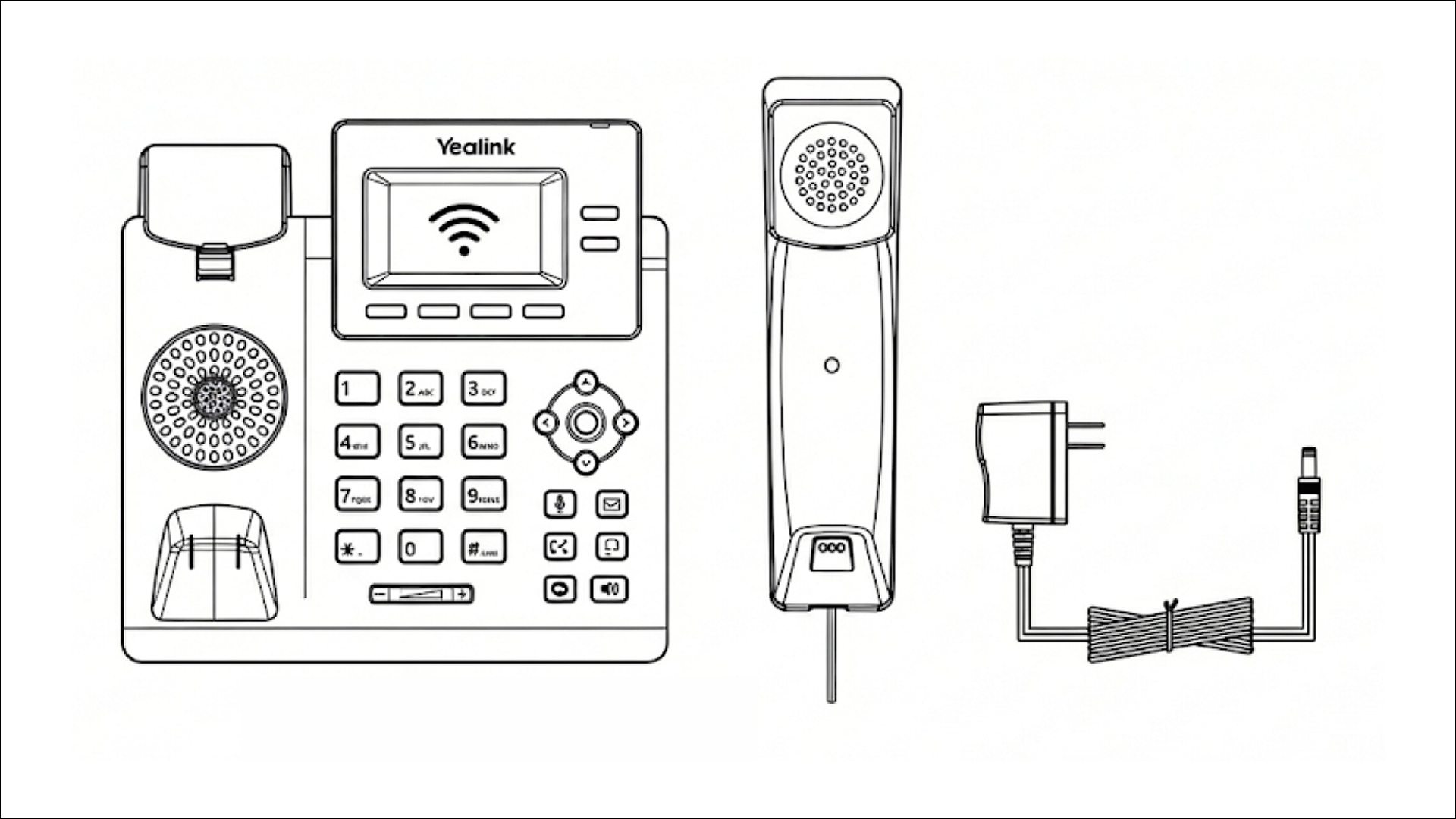
How to Set Up a Kids VoIP Landline Phone at Home | UK Parent Guide 2026
25 Jan 2026 · 8 min read